Subsea equipment
Handling frames, deployment equipment, seabed tools and supporting systems that require controlled mechanical definition.
Engineering · Equipment · Industrial Systems
Marine & Offshore Engineering
Independent engineering for subsea equipment, cable-handling systems, vessel interfaces, deployment operations and offshore project delivery.
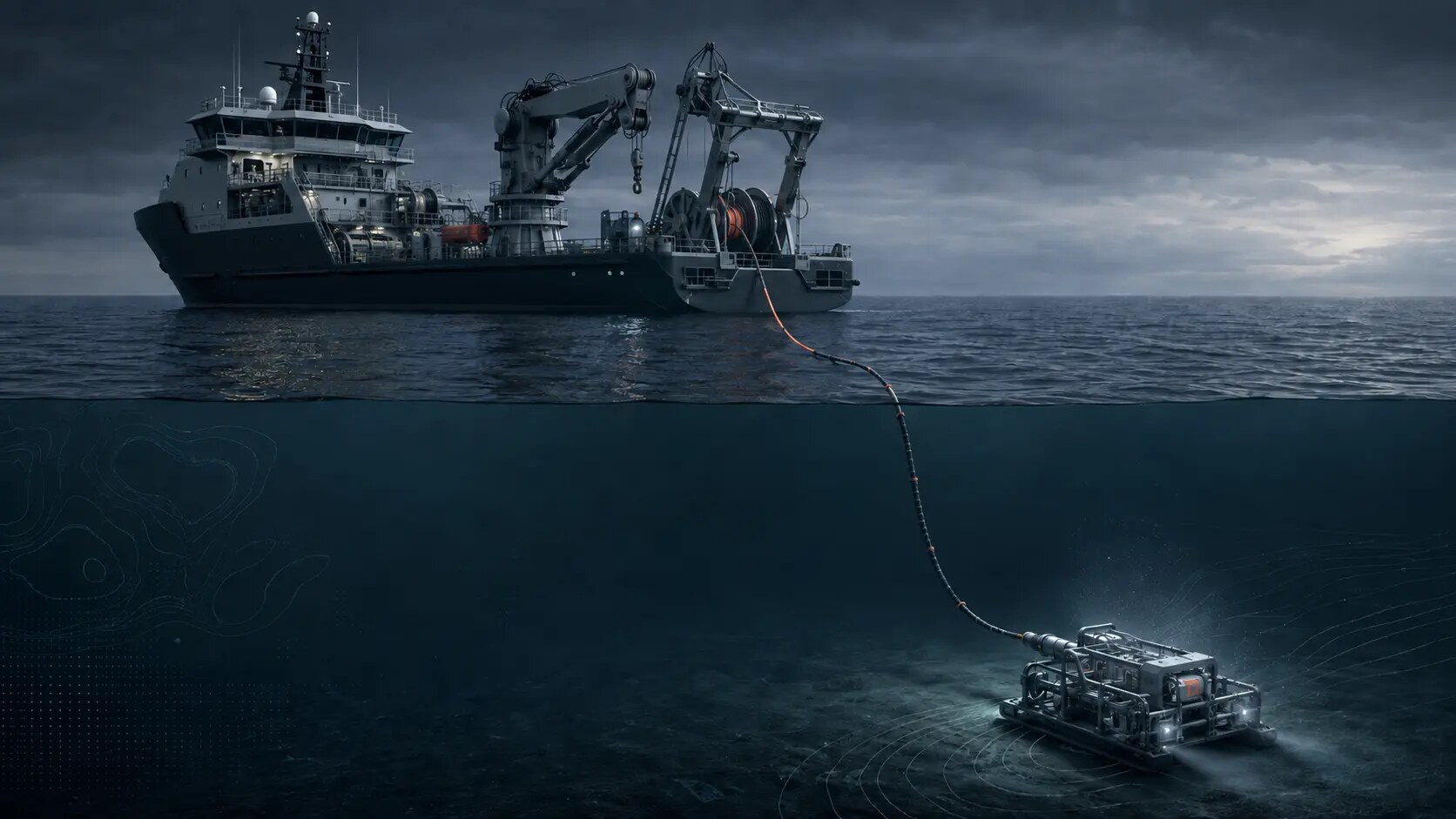
Marine and offshore equipment succeeds at the interfaces: equipment to vessel, cable to handling system, structure to seabed, design to fabricator and procedure to field operation.
MareForge provides a managed engineering cell that can define those interfaces, develop the equipment and coordinate the technical package without forcing the client to build a permanent multidisciplinary team.
Where the operating basis or available evidence is incomplete, a Technical Assessment defines the next scope. Custom tools and mechanical systems can then progress through Equipment Development, with vessel and offshore interfaces retained in the engineering baseline.
For worked examples, explore our illustrative studies of vessel equipment removal and temporary cable guide engineering.
The objective is controlled integration: a system whose operating assumptions, physical interfaces and release status are visible before execution begins.
Engagement signals
Handling frames, deployment equipment, seabed tools and supporting systems that require controlled mechanical definition.
Rollers, guides, routing, support structures and temporary systems where cable geometry and operational sequence interact.
Vessel and deck equipment, lifting, handling and launch-and-recovery interfaces developed around operating loads, available space and coordination between equipment and vessel stakeholders.
Existing systems that need new capability despite incomplete data, constrained space or legacy design decisions.
Defined outputs
Concept development for marine and offshore equipment, translating requirements, operating sequence, functional intent, interfaces and limiting assumptions into an engineering basis.
Concept, preliminary and detailed mechanical development according to the agreed design maturity and gates.
Dimensions, loads, connections, data ownership and responsibilities recorded across equipment, vessel, site and supplier boundaries.
Equipment arrangement, routing, installation sequence and practical operating constraints assessed as one system.
Calculations, specialist FEA/CFD and design reviews integrated into the project baseline when required by the scope.
Controlled drawings, specifications, BOM data and technical queries suitable for qualified fabricators and vendors.
Engineering animation, installation sequencing and interface communication used to validate and explain the solution.
Design decisions, reviews, comments and release status maintained through explicit gates and controlled change.
Controlled progression
Establish the mission, environment, constraints, stakeholders and acceptance basis before selecting the hardware.
Map vessel, equipment, cable, site, controls, supplier and compliance dependencies into one baseline.
Progress mechanical design, engineering calculations and CAD definition through documented reviews, proportionate design checks and disciplined change control.
Issue the agreed technical package and support qualified suppliers or a separate managed-execution scope.
Scope boundaries
Commercial discipline
Start a focused conversation